
The Backyard Bee Project
What are mason bees?
Mason Bee is a general term for any bee species in the genus Osmia. They are tunnel-nesting solitary pollinators that use mud or clay to seal the opening of their homes. These bees are native to North America and the Puget Sound region alone is home to over 18 species!
Why are they important?
These solitary bees are docile and are excellent pollinators, 120 times more effective than honey or bumble bees! Mason bees emerge in early spring, before other pollinators are active. This makes them vital for pollinating early blooming native plants and fruit crops.

Why raise mason bees?
Mason bee populations are shrinking due to habitat loss and poor nesting options. Raising bees in a mason bee house can help support their populations, increase the productivity of your garden, and help you feel more connected to your ecosystem. It’s also a great way for kids and adults alike to learn about insects. And the best part? They don’t sting!
What are other ways to help?
Provide hollow stemmed plants that can provide additional shelter
Plant native plants like:
Oregon Grape
Evergreen Huckleberry
Red Flowering Currant
Incorporate fruit trees
Plant gardens with successional blooms for a consistent food source
Our Mason Bee Houses
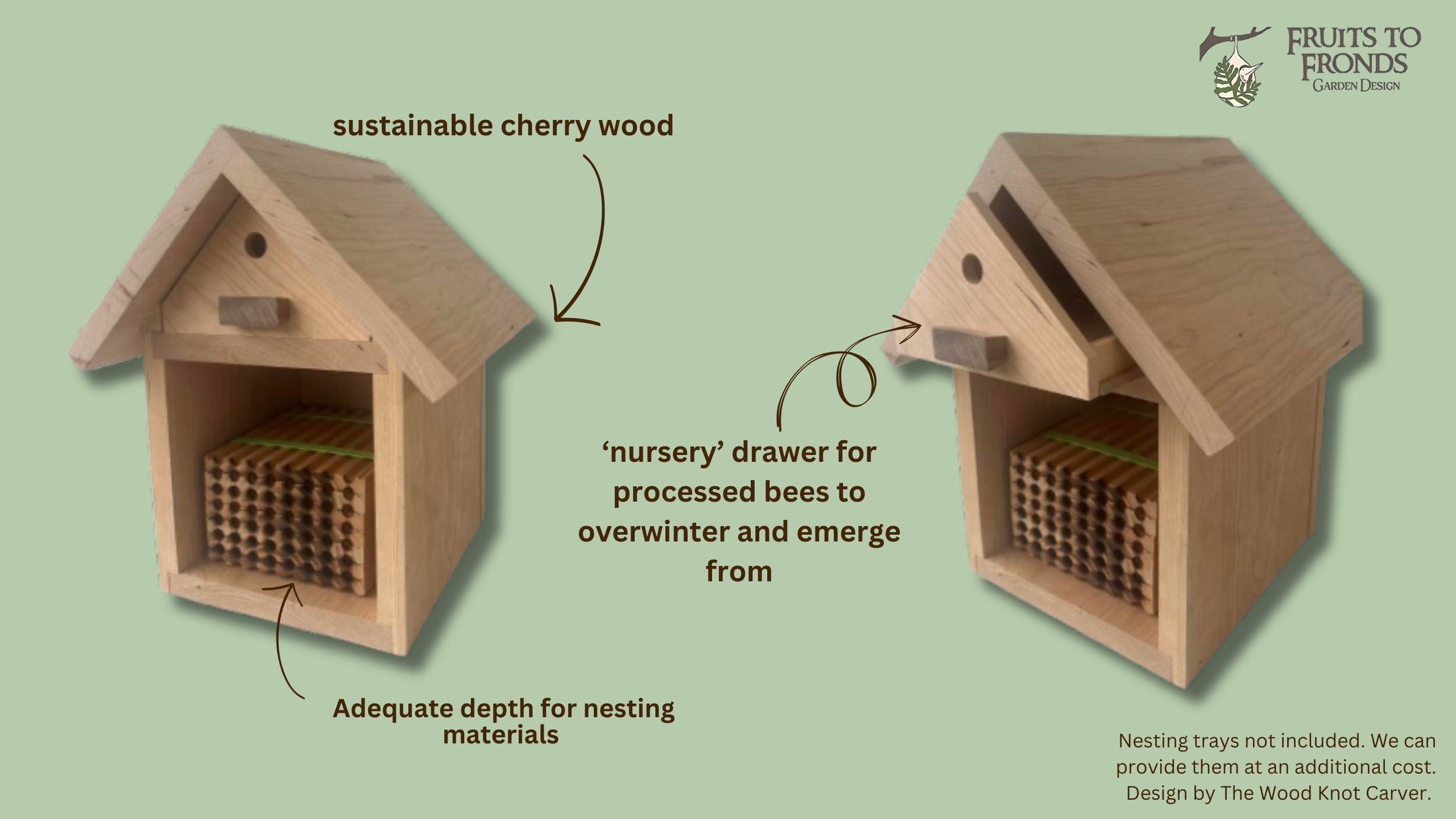
What makes our houses different?
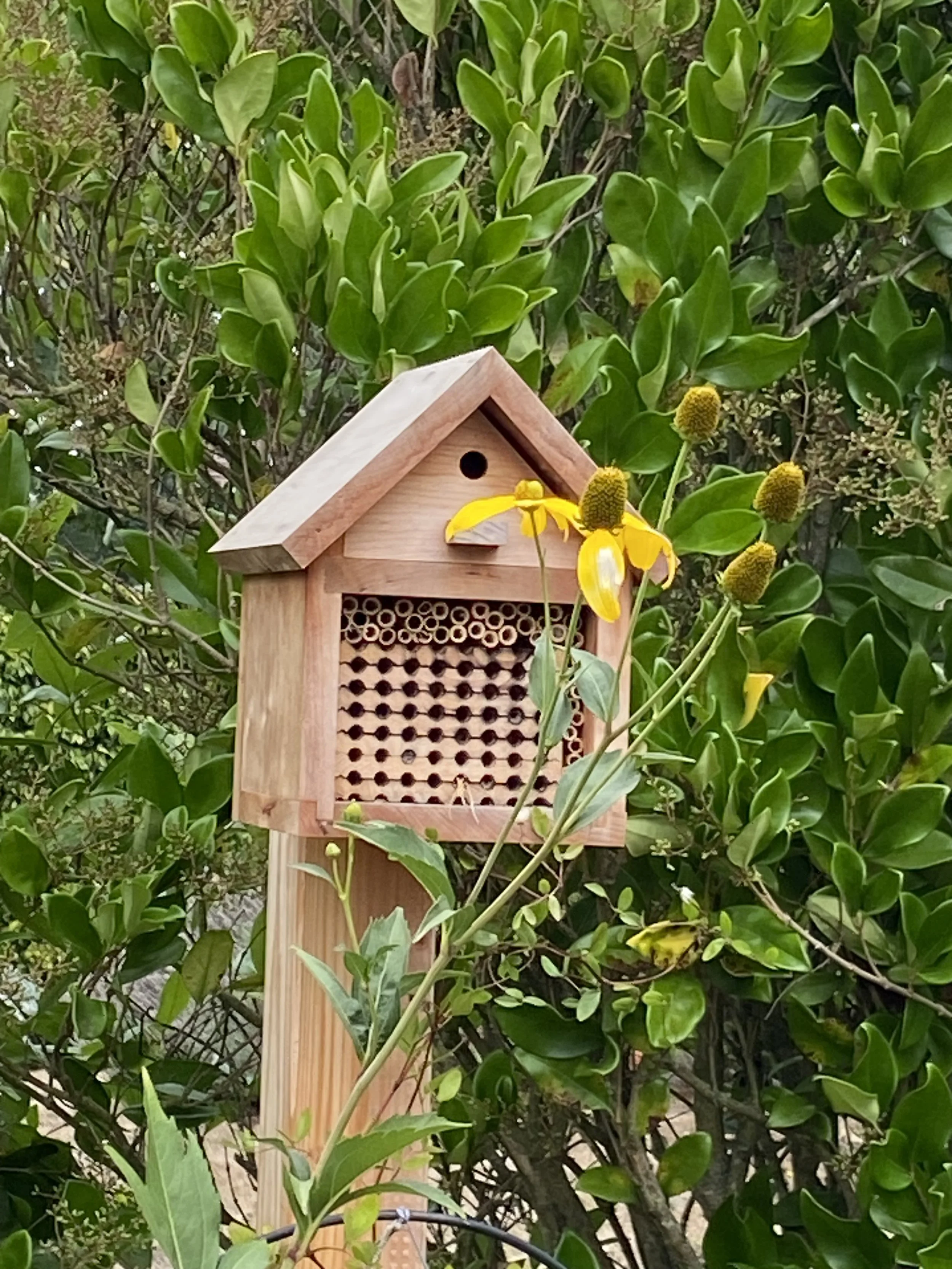
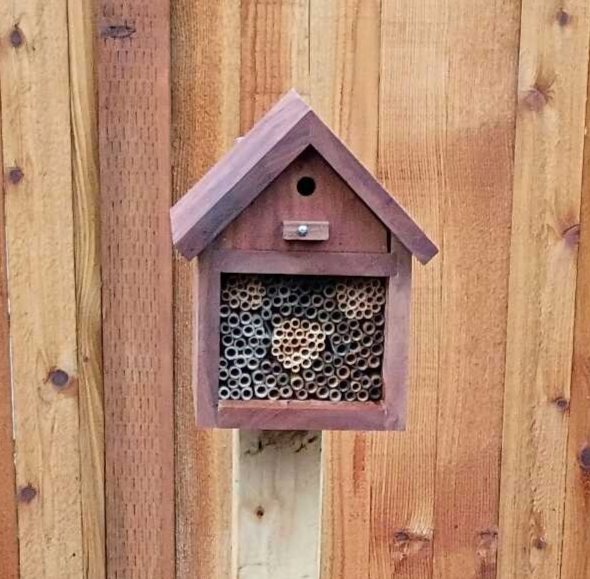
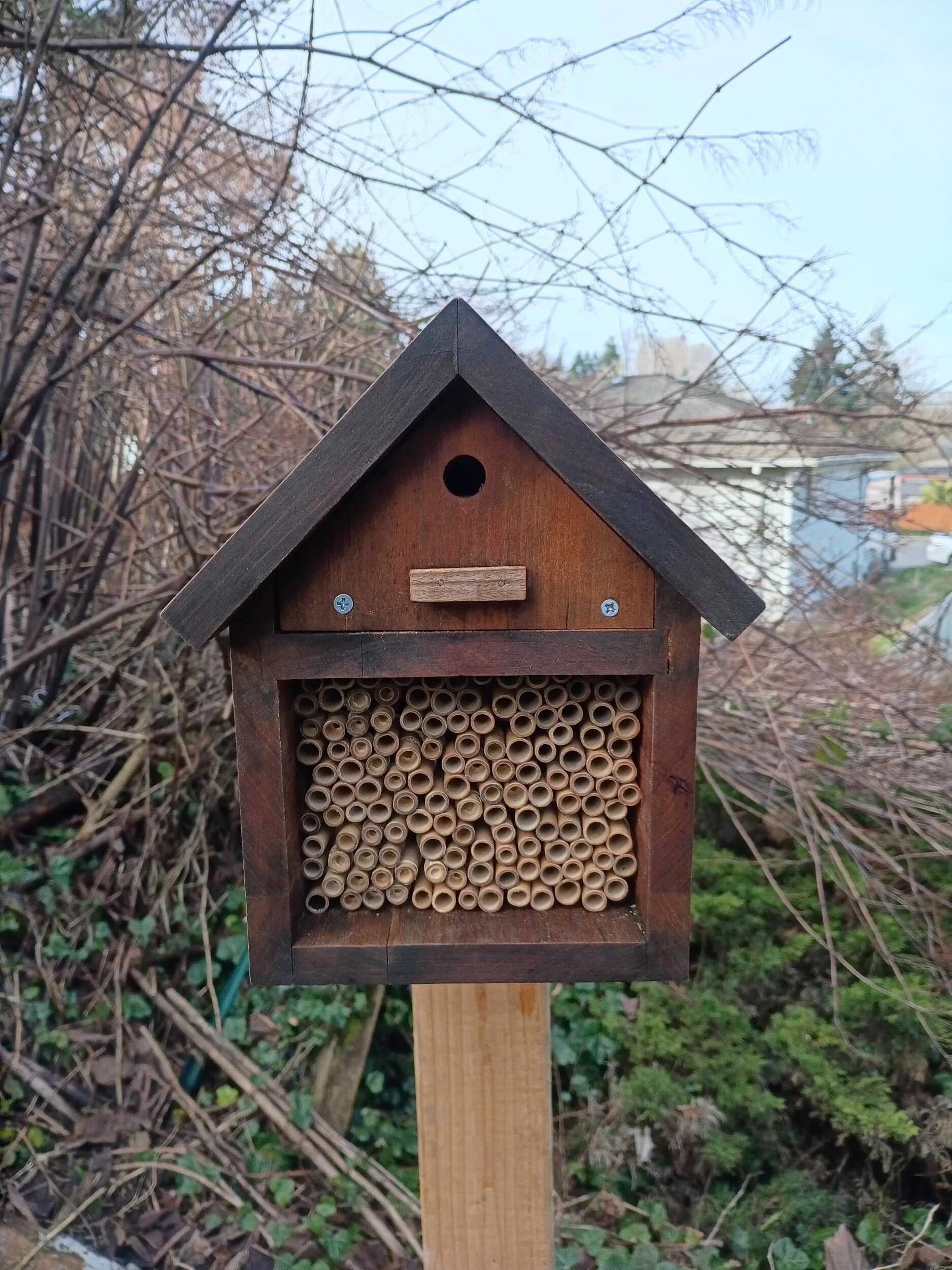
Are constructed from sustainably-sourced PNW cherry hardwood, reducing the demand for cedar
Are hand crafted by local artisan
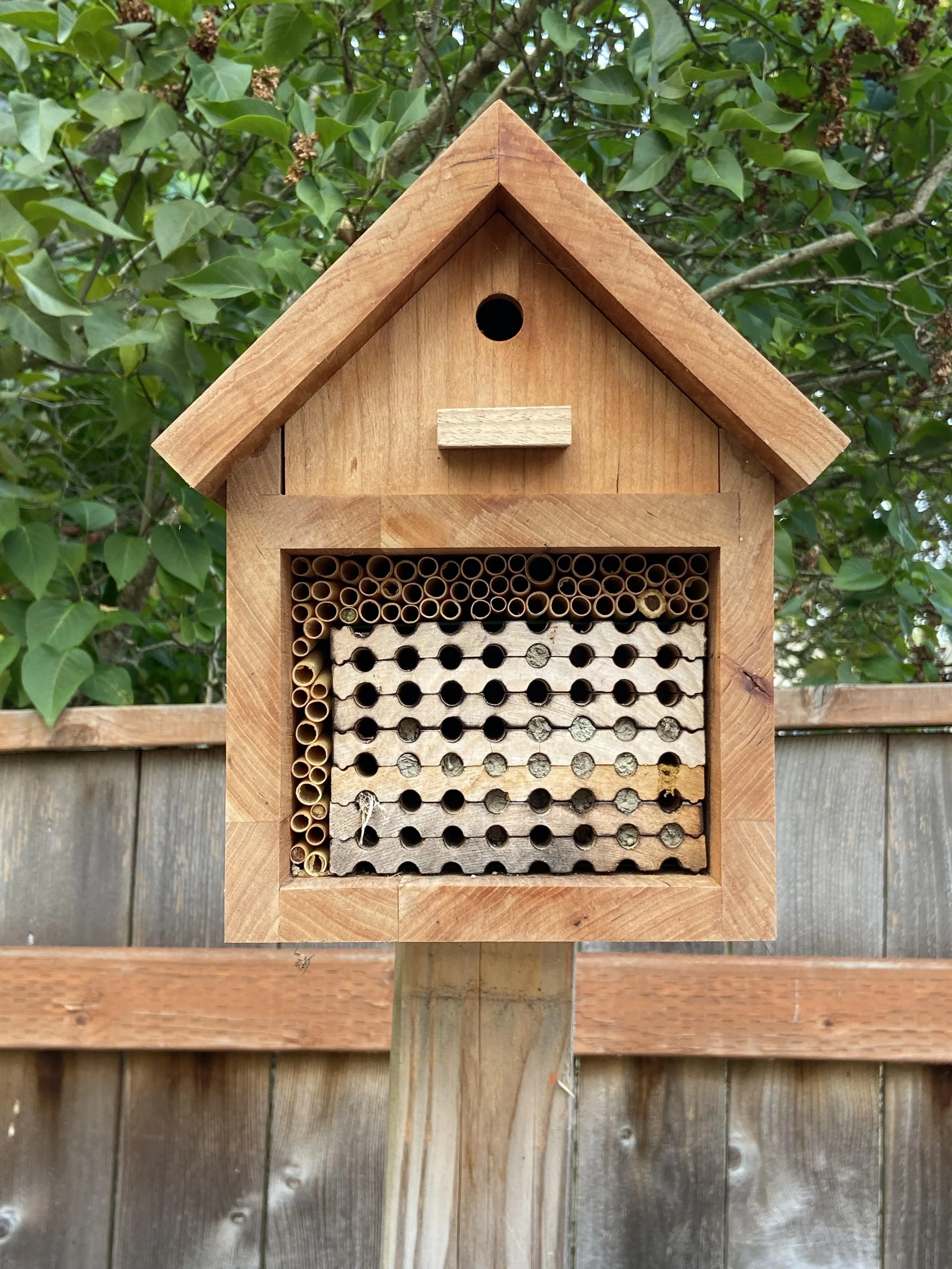
Have a secure “nursery” that allows the bees to spend their entire lifecycle in the house
Come with nesting materials and mason bee cocoons!
Mason Bee House Services
Installation of box, reeds, and bees
Overwintering and professional cleaning
Cocoon monitoring in the fall - See how many bees call your garden home!
Contact Us to Get Started!
Hatch to Hatch - A Fruits to Fronds Guide to Caring for Your Mason Bees
Already have your bee box? Looking for more information on mason bee life cycles and how you can support them? Here’s our handy guide to what to expect and look out for!
-
What Are Your Bees Doing?
The male mason bees are the first to emerge in the spring, they scout for nesting spots and wait for females to begin mating.
Females bees then hatch and begin to mate. Although they only live for 6-8 weeks, each female can lay between 15-20 eggs!
Females will lay their eggs in reeds or tubes (hopefully in your bee house!), then pack it with pollen (for the larva to eat) and cap the tube with a mud seal.
What Can you Do to Support Them?
The BEST thing you can do to help the bees succeed is ensuring there is food for them when they hatch. Plants that bloom in early spring Mahonia repens are a great choice!
Provide nesting materials for female bees to lay eggs in. Luckily, your mason bee houses are well suited for the bees to repopulate with their next generation.
Allow access to bare ground in your garden for bees to source material for the mud seal in the nesting tube.
-
What Are Your Bees Doing?
Adult mason bees will have completed their jobs by early to mid June, but this doesn’t mean there is nothing going on.
Inside the bee house the eggs have hatched into larva and are beginning to consume the pollen which will supply them with ample energy to spin cocoons and hibernate through the fall and winter.
What Can You Do to Support Them?
Be mindful of predation! Hungry birds may peck the bee house reeds for a quick snack. If this is occurring, placing a mesh screen over the reeds can help. We are happy to install one if your bee house becomes a target.
Regularly check the nursery chamber of your bee house. Wasps may find it an ideal place to create their nests. Temporarily stuffing the chamber with a paper bag or newspaper can discourage this.
-
What Are Your Bees Doing?
At this point, your bees should be in hibernation. While this can vary based on temperature and latitude, your bees will have entered hibernation by September.
What Can You Do to Support Them?
In late fall, the bee cocoons will be ready to be cleaned and transferred into the nursery chamber.
Cocoons can be easily cleaned using soft toothbrushes and paper towels. The team at Fruits to Fronds is happy to help upon request!
Be aware that pollen mites, fly larvae, parasitic wasps and fungus may be present. This may have compromised some cocoons. This is normal!
The presence of these parasites is why it’s important to clean the cocoons prior to spring hatching season.
-
What Are Your Bees Doing?
The bees are continuing to hibernate, waiting for temperatures to be suitable to hatch.
What Can You Do to Support Them?
Periodically check your cocoons for mold. Winter weather events like atmospheric rivers and wind storms in addition to our typical PNW moisture can encourage mold on the cocoons.
Mold can be easily removed by gently wiping cocoons with a dry paper towel.
Be aware of attempted predation. Placing cocoons further back in the nursery chamber can help keep your bees out of the beaks of hungry birds.

Join Our Bee Family
*
Join Our Bee Family *
North Mercer Island

Chicago, Illinois

Seward Park
Fauntleroy
Arbor Heights

Madison Park
West Seattle
Rainier Beach

Central Mercer Island

Maple Leaf
Arbor Heights, Our Office